
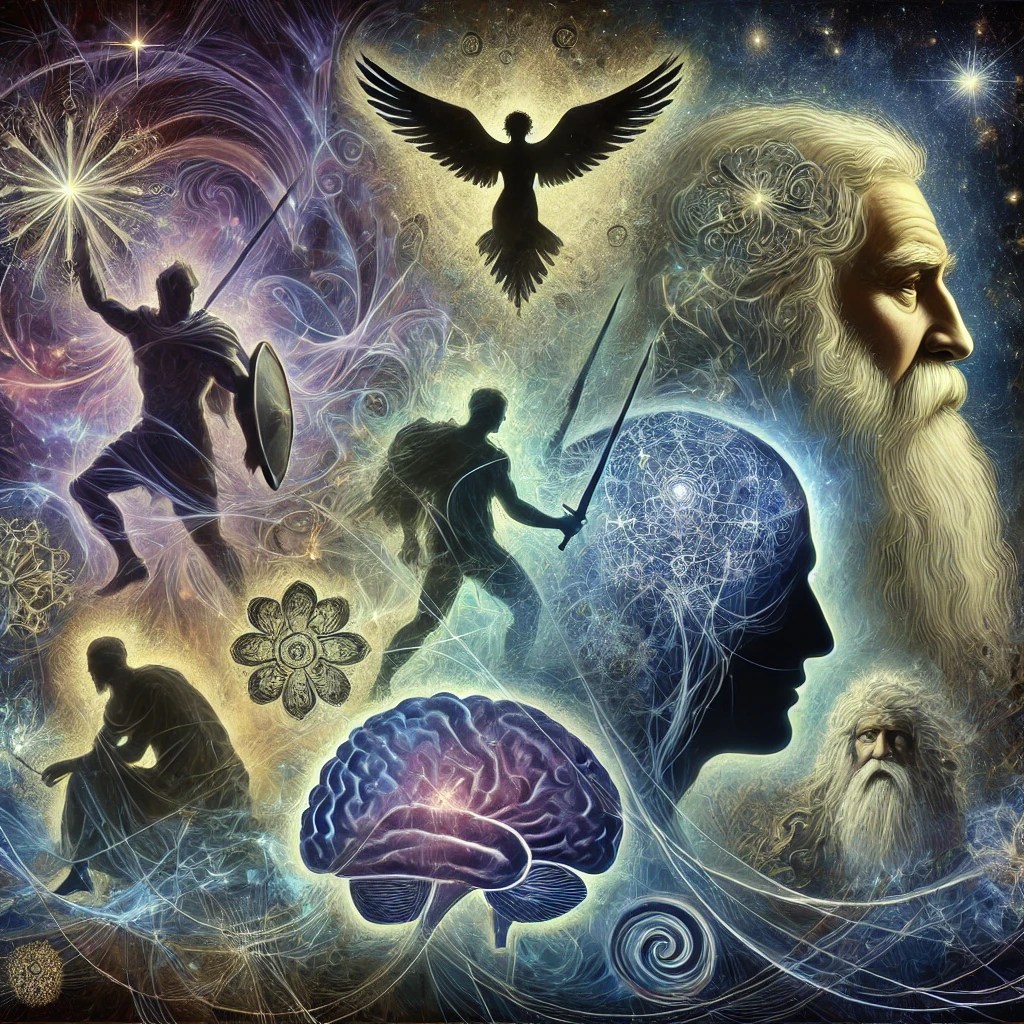
At the heart of Nexus Epistemology lies the understanding that knowledge is not just an abstract collection of facts but a deeply relational and dynamic process shaped by our inner and outer worlds. One of the most powerful ways to understand this process is through the concept of archetypes—universal symbols and patterns that reside within the human psyche and shape how we perceive and interact with the world. Jung wrote, “The archetype is not a thing, but a function; it is not a fixed content, but an organizing principle that works through the unconscious.” Neumann (1954) articulated, “The archetype is a universal, structural element of the unconscious that shapes the development of consciousness and the process of individuation.” In this blog, we will explore how archetypes function within the epistemic field and their role in the construction of meaning.
What Are Archetypes?
Archetypes are primordial images, symbols, and motifs that emerge across cultures, time periods, and personal experiences. They are deeply embedded in the human unconscious and have been a central concept in psychology, particularly in Carl Jung’s theories. According to Jung (1964), archetypes are shared patterns of thought and behavior that transcend individual experiences. They are the blueprints from which individuals draw meaning and understanding about themselves, others, and the world around them.
These archetypal patterns can be observed in myths, stories, religious symbolism, and even in everyday life. Common examples include the Hero, the Shadow, the Wise Old Man, and the Anima/Animus. These archetypes are not merely psychological constructs but also carry deep epistemic implications, as they shape how we come to know and understand the world.
Archetypes and the epistemic field
The Epistem, as defined within Nexus Epistemology, is the force whereby knowledge is generated in living brains. The epistmic field, however, is an individual manifestation of the Epistem in a singular person and brain, which grows over the course of our life as we learn and grow. One might say that the epistemic field is a dynamic space where personal experiences, cultural narratives, and collective consciousness intersect. For example, if a person goes to school throughout their life, their epistemic field will look different from someone who does not and so will their neural networks. One way or the other though, our brains will create neural networks and will establish a knowledge base, and this makes up the entirety of our individualized epistemic field. Naturally, the role of archetypes within this field is profound, as they function as both lenses through which we perceive the world and as frameworks that help us organize and process the knowledge we encounter.
- Archetypes as Lenses of Perception: Archetypes serve as filters through which individuals interpret reality. For instance, a person who identifies with the archetype of the Hero may view life’s challenges as opportunities for personal growth and triumph. Conversely, someone embodying the archetype of the Victim might perceive the same challenges as insurmountable obstacles. These archetypal perspectives influence how individuals construct meaning from their experiences acting as lenses through with we see the world. In therapy, understanding the archetypes that a client identifies with can provide valuable insights into their worldview and cognitive patterns. For the client, the archetype is a orienting mechanism through which they conceptualize new and recurrent possibilities. By recognizing which archetypes dominate our thinking, a therapist can help clients reframe their experiences and encourage more empowering interpretations of their lives. One possible way to do this in our life is to establish our relationships to the archetypes first and then reframe our relationship to them through “archtypal journey mapping.” We will cover this concept in more detail in a later blog post.
- Archetypes as Organizing Structures for Knowledge: Archetypes not only shape perception but also act as organizing structures within the epistemic field. As individuals navigate through life, they encounter various pieces of knowledge—ideas, beliefs, experiences—that are often fragmented and disconnected. Archetypes provide a way to organize these disparate pieces into cohesive, meaningful narratives. Consider the archetype of the Mentor, for example. A person may learn a variety of lessons from different sources—teachers, books, personal experiences—but these lessons are often scattered. When the individual consciously connects these lessons to the Mentor archetype, they begin to see the lessons as part of a larger process of personal growth and wisdom. The archetype helps integrate seemingly unrelated bits of knowledge into a unified whole. This is particularly significant in therapeutic contexts, where clients often struggle with fragmented or incoherent understandings of their lives. By engaging with archetypes, therapists can help clients piece together a more comprehensive and meaningful narrative that brings coherence to their experiences.
- Archetypes in the Cultural Context: Archetypes are not only personal but also cultural. Every culture has its own set of archetypal figures and narratives that shape the collective consciousness. These cultural archetypes inform how knowledge is passed down, what is considered meaningful, and what is valued. In the context of counseling, cultural archetypes are especially important. Therapists must be aware of the cultural archetypes that influence their clients’ perceptions of the world. For instance, in some cultures, the archetype of the Warrior may embody strength, resilience, and honor, while in others, the archetype of the Caregiver may emphasize nurturing and selflessness. Understanding these cultural archetypes can help therapists better understand their clients’ values, struggles, and goals, allowing for a more culturally competent and effective therapeutic process.
- The Dynamic Interaction of Archetypes in the Epistemic Field: Archetypes do not exist in isolation; they are constantly interacting with one another within the epistemic field. This dynamic interaction shapes how individuals understand themselves and the world. For example, the Hero archetype might conflict with the Shadow archetype, leading to internal tension and struggles over identity. Similarly, the Wise Old Man archetype might clash with the Trickster, creating moments of paradox and revelation. In therapy, these archetypal conflicts can be fertile ground for exploration. By identifying and mapping out the relationships between the archetypes that a client is engaging with, a therapist can help the client navigate these tensions and arrive at deeper insights about their identity, purpose, and life choices.
Archetypes in Therapeutic Practice
- Archetypal Mapping in Therapy: One of the most powerful tools in Nexus Epistemology is archetypal mapping. This process involves identifying the archetypes that dominate a client’s worldview and mapping them out to understand the interconnections between different patterns of meaning. By making these connections explicit, therapists can guide clients in understanding how their current life challenges relate to larger, universal archetypal themes. The process of archetypal mapping involves six major steps: 1) introduction to archetypes, 2) Identifying your archetypes, 3) Exploring archetypal manifestations, 4) Exploring how these archetypes serve us, 5) Reframing and integration, and 6) Creating an Archetypal Map. Again, we will cover this in detail in a future blog post.
- Empowering the Client with Archetypal Awareness: An essential part of the therapeutic process is empowering clients to recognize and work with the archetypes present in their lives. This awareness allows clients to move beyond limiting patterns and adopt new ways of thinking and being. For example, a client who sees themselves as a Victim might be introduced to the archetype of the Warrior, helping them reclaim their personal agency and power.
Conclusion
Archetypes play a central role in Nexus Epistemology by acting as both the lenses through which we perceive the world and the organizing structures that shape our knowledge and meaning. They are integral to understanding how we construct reality, navigate life’s challenges, and integrate personal and collective knowledge. By recognizing and working with archetypes, therapists can facilitate deep, transformative change in their clients, helping them develop a more coherent and empowered narrative of their lives.
As you engage with your own epistemic field, take a moment to reflect on the archetypes that shape your understanding of the world. How do these archetypes influence your decisions, relationships, and sense of purpose? By uncovering and exploring these patterns, you can unlock new possibilities for growth, transformation, and meaning in your own life.
References
Campbell, J. (2004). The hero with a thousand faces (2nd ed.). Princeton University Press.
Jung, C. G. (1964). Man and his symbols. Doubleday.
Jung, C. G. (1970). Psychological aspects of the archetype. In Collected works of C.G. Jung (Vol. 9, Part 1). Princeton University Press.
Neumann, E. (1954). The origins and history of consciousness. Princeton University Press.
Stein, M. (1998). Jung’s map of the soul: An introduction. Open Court.
 Soulstice Counseling