The Role of Archetypes in the Epistemic field: Understanding Their Impact on Knowledge and Meaning

At the heart of Nexus Epistemology lies the understanding that knowledge is not just an abstract collection of facts but a deeply relational and dynamic process shaped by our inner and outer worlds. One of the most powerful ways to understand this process is through the concept of archetypes—universal symbols and patterns that reside within the human psyche and shape how we perceive and interact with the world. Jung wrote, “The archetype is not a thing, but a function; it is not a fixed content, but an organizing principle that works through the unconscious.” Neumann (1954) articulated, “The archetype is a universal, structural element of the unconscious that shapes the development of consciousness and the process of individuation.” In this blog, we will explore how archetypes function within the epistemic field and their role in the construction of meaning.

What Are Archetypes?

Archetypes are primordial images, symbols, and motifs that emerge across cultures, time periods, and personal experiences. They are deeply embedded in the human unconscious and have been a central concept in psychology, particularly in Carl Jung’s theories. According to Jung (1964), archetypes are shared patterns of thought and behavior that transcend individual experiences. They are the blueprints from which individuals draw meaning and understanding about themselves, others, and the world around them.

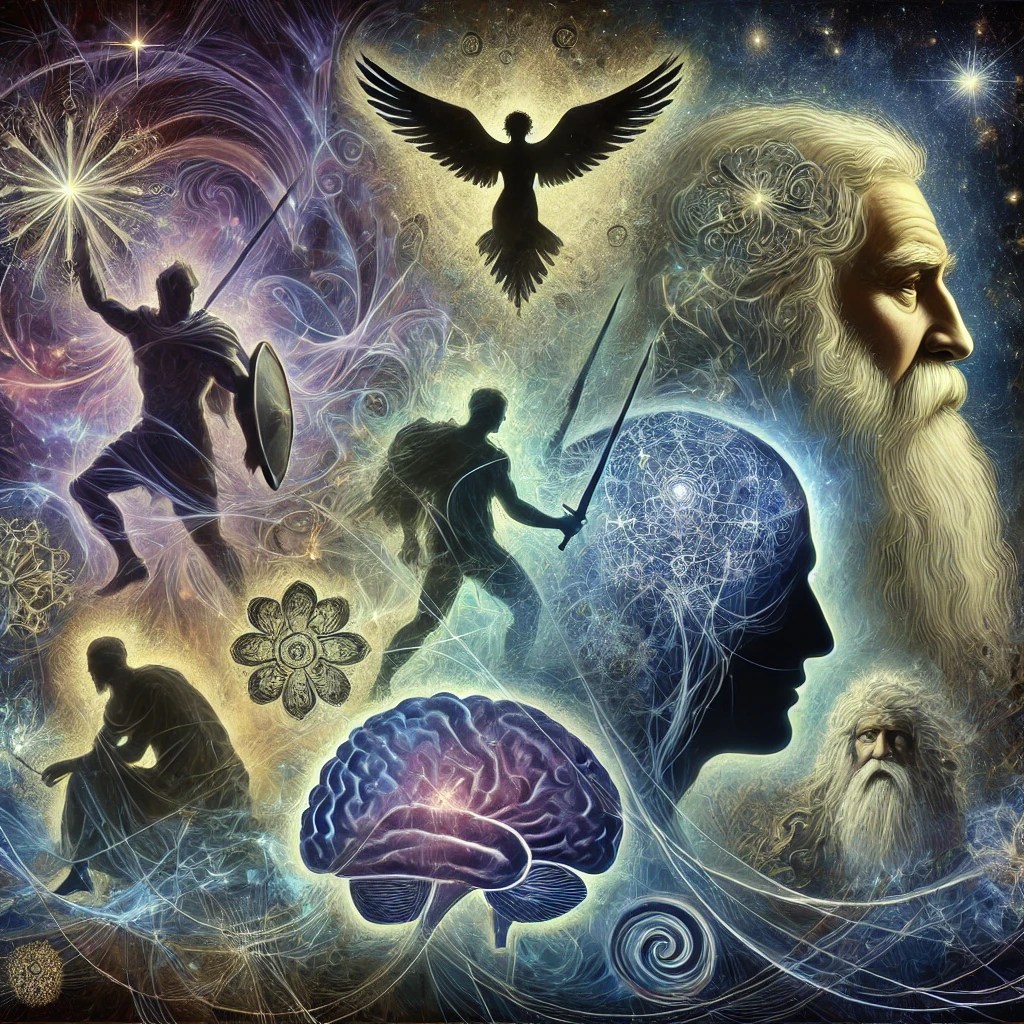
These archetypal patterns can be observed in myths, stories, religious symbolism, and even in everyday life. Common examples include the Hero, the Shadow, the Wise Old Man, and the Anima/Animus. These archetypes are not merely psychological constructs but also carry deep epistemic implications, as they shape how we come to know and understand the world.

Archetypes and the epistemic field

The Epistem, as defined within Nexus Epistemology, is the force whereby knowledge is generated in living brains. The epistmic field, however, is an individual manifestation of the Epistem in a singular person and brain, which grows over the course of our life as we learn and grow. One might say that the epistemic field is a dynamic space where personal experiences, cultural narratives, and collective consciousness intersect. For example, if a person goes to school throughout their life, their epistemic field will look different from someone who does not and so will their neural networks. One way or the other though, our brains will create neural networks and will establish a knowledge base, and this makes up the entirety of our individualized epistemic field. Naturally, the role of archetypes within this field is profound, as they function as both lenses through which we perceive the world and as frameworks that help us organize and process the knowledge we encounter.

  1. Archetypes as Lenses of Perception: Archetypes serve as filters through which individuals interpret reality. For instance, a person who identifies with the archetype of the Hero may view life’s challenges as opportunities for personal growth and triumph. Conversely, someone embodying the archetype of the Victim might perceive the same challenges as insurmountable obstacles. These archetypal perspectives influence how individuals construct meaning from their experiences acting as lenses through with we see the world. In therapy, understanding the archetypes that a client identifies with can provide valuable insights into their worldview and cognitive patterns. For the client, the archetype is a orienting mechanism through which they conceptualize new and recurrent possibilities. By recognizing which archetypes dominate our thinking, a therapist can help clients reframe their experiences and encourage more empowering interpretations of their lives. One possible way to do this in our life is to establish our relationships to the archetypes first and then reframe our relationship to them through “archtypal journey mapping.” We will cover this concept in more detail in a later blog post.
  2. Archetypes as Organizing Structures for Knowledge: Archetypes not only shape perception but also act as organizing structures within the epistemic field. As individuals navigate through life, they encounter various pieces of knowledge—ideas, beliefs, experiences—that are often fragmented and disconnected. Archetypes provide a way to organize these disparate pieces into cohesive, meaningful narratives. Consider the archetype of the Mentor, for example. A person may learn a variety of lessons from different sources—teachers, books, personal experiences—but these lessons are often scattered. When the individual consciously connects these lessons to the Mentor archetype, they begin to see the lessons as part of a larger process of personal growth and wisdom. The archetype helps integrate seemingly unrelated bits of knowledge into a unified whole. This is particularly significant in therapeutic contexts, where clients often struggle with fragmented or incoherent understandings of their lives. By engaging with archetypes, therapists can help clients piece together a more comprehensive and meaningful narrative that brings coherence to their experiences.
  3. Archetypes in the Cultural Context: Archetypes are not only personal but also cultural. Every culture has its own set of archetypal figures and narratives that shape the collective consciousness. These cultural archetypes inform how knowledge is passed down, what is considered meaningful, and what is valued. In the context of counseling, cultural archetypes are especially important. Therapists must be aware of the cultural archetypes that influence their clients’ perceptions of the world. For instance, in some cultures, the archetype of the Warrior may embody strength, resilience, and honor, while in others, the archetype of the Caregiver may emphasize nurturing and selflessness. Understanding these cultural archetypes can help therapists better understand their clients’ values, struggles, and goals, allowing for a more culturally competent and effective therapeutic process.
  4. The Dynamic Interaction of Archetypes in the Epistemic Field: Archetypes do not exist in isolation; they are constantly interacting with one another within the epistemic field. This dynamic interaction shapes how individuals understand themselves and the world. For example, the Hero archetype might conflict with the Shadow archetype, leading to internal tension and struggles over identity. Similarly, the Wise Old Man archetype might clash with the Trickster, creating moments of paradox and revelation. In therapy, these archetypal conflicts can be fertile ground for exploration. By identifying and mapping out the relationships between the archetypes that a client is engaging with, a therapist can help the client navigate these tensions and arrive at deeper insights about their identity, purpose, and life choices.

Archetypes in Therapeutic Practice

  1. Archetypal Mapping in Therapy: One of the most powerful tools in Nexus Epistemology is archetypal mapping. This process involves identifying the archetypes that dominate a client’s worldview and mapping them out to understand the interconnections between different patterns of meaning. By making these connections explicit, therapists can guide clients in understanding how their current life challenges relate to larger, universal archetypal themes. The process of archetypal mapping involves six major steps: 1) introduction to archetypes, 2) Identifying your archetypes, 3) Exploring archetypal manifestations, 4) Exploring how these archetypes serve us, 5) Reframing and integration, and 6) Creating an Archetypal Map. Again, we will cover this in detail in a future blog post.
  2. Empowering the Client with Archetypal Awareness: An essential part of the therapeutic process is empowering clients to recognize and work with the archetypes present in their lives. This awareness allows clients to move beyond limiting patterns and adopt new ways of thinking and being. For example, a client who sees themselves as a Victim might be introduced to the archetype of the Warrior, helping them reclaim their personal agency and power.

Conclusion

Archetypes play a central role in Nexus Epistemology by acting as both the lenses through which we perceive the world and the organizing structures that shape our knowledge and meaning. They are integral to understanding how we construct reality, navigate life’s challenges, and integrate personal and collective knowledge. By recognizing and working with archetypes, therapists can facilitate deep, transformative change in their clients, helping them develop a more coherent and empowered narrative of their lives.

As you engage with your own epistemic field, take a moment to reflect on the archetypes that shape your understanding of the world. How do these archetypes influence your decisions, relationships, and sense of purpose? By uncovering and exploring these patterns, you can unlock new possibilities for growth, transformation, and meaning in your own life.

References

Campbell, J. (2004). The hero with a thousand faces (2nd ed.). Princeton University Press.

Jung, C. G. (1964). Man and his symbols. Doubleday.

Jung, C. G. (1970). Psychological aspects of the archetype. In Collected works of C.G. Jung (Vol. 9, Part 1). Princeton University Press.

Neumann, E. (1954). The origins and history of consciousness. Princeton University Press.

Stein, M. (1998). Jung’s map of the soul: An introduction. Open Court.
Is Nexus Epistemology Only for Philosophers?

Nexus Epistemology might sound like a theory designed for philosophers or intellectuals, but its reach extends far beyond the ivory tower. This framework is about how we, as human beings, organize, interpret, and interact with knowledge in our daily lives. It’s not just for academics; it’s for anyone who seeks to understand themselves and their world better, which is pretty cool if I do say so myself.

A Universal Framework for Knowledge

At its heart, Nexus Epistemology explores the relationship between the Epistem (the origin and collective source of knowledge) and referents (the ways we structure and contextualize knowledge). Whether it’s solving a personal dilemma or advancing scientific understanding, this interplay affects us all.

But what does this mean in real life? Let’s explore some scenarios:


1. Counseling and Personal Growth

Imagine a therapist working with a client who feels stuck in their life. Through a Nexus Counseling approach, the therapist helps the client identify their personal referents—stories they tell themselves about who they are and what they can achieve.

A client struggling with self-worth might carry a personal referent of being “not good enough,” derived from cultural or familial influences. The therapist might introduce meta referents like the Hero’s Journey showing how their challenges are part of a larger narrative of growth and self-discovery. By situating the client’s experience within this structure, the therapist offers new ways to interpret their struggles and envision a path forward.


2. Education and Learning

Teachers constantly help students build knowledge by connecting the abstract to the concrete. Nexus Epistemology provides a framework for how this process works.

A high school science teacher explains gravity (a universal referent) by asking students to experiment with dropping objects of different weights. The teacher encourages students to connect their findings to everyday experiences, like why heavier backpacks feel harder to lift. By doing so, the teacher bridges universal and personal referents, making the abstract principle relatable and memorable.


3. Parenting and Guiding Children

Parents often teach their children values and skills by weaving together lessons from their own experiences and cultural traditions.

A parent teaching a child about honesty might share a personal story (a personal referent) while also referencing cultural tales or fables (meta and archetypal referents) that highlight honesty’s importance. This approach creates a layered understanding that resonates both personally and universally for the child.


4. Workplace Collaboration and Leadership

In team settings, leaders frequently navigate the tension between individual perspectives and group goals. A manager might use Nexus Epistemology to understand how different team members operate from distinct personal referents—e.g., one values collaboration, another prizes efficiency. By identifying meta-referents like shared organizational goals, the manager can guide the team to align their efforts, fostering harmony and productivity.


5. Personal Decision-Making

Nexus Epistemology offers insights into how we approach life’s big decisions by recognizing the different types of knowledge at play. Someone deciding whether to change careers might reflect on their personal referents (e.g., “I’ve always been passionate about helping people”) while considering universal referents like financial stability or societal expectations. By integrating these layers, they can make a choice that feels authentic and balanced.


Why Nexus Epistemology Matters

The beauty of Nexus Epistemology lies in its accessibility. It provides a lens to explore how we organize and interpret knowledge, not just in academic settings but in the most ordinary moments.

  • In Relationships: Understanding how others’ personal referents differ from our own can improve empathy and communication.
  • In Creativity: Recognizing archetypal referents in art, literature, or music can deepen our appreciation and inspire our own creations.
  • In Problem-Solving: Seeing how meta-referents shape societal systems can lead to innovative solutions.

Philosophy for Everyone

At its core, Nexus Epistemology isn’t reserved for philosophers. It’s for anyone curious about how knowledge shapes and organizes their world. Whether you’re a parent, a professional, or someone navigating personal growth, this framework offers practical tools to understand yourself and others more deeply.

The next time you reflect on your choices or help someone else make sense of theirs, consider this: you’re engaging in the very processes Nexus Epistemology describes. And that makes this theory not just a philosophical exercise, but a guide to living a more intentional, meaningful life.


What other real-world examples of Nexus Epistemology can you imagine? Share your thoughts in the comments below!

The Nexus Approach: Key Counseling Techniques for Insight and Transformation

Creating counseling techniques based on Nexus Epistemology involves designing interventions that engage with the various layers of Referents (universal, personal, archetypal, meta, etc.) and leverage their nexal connections to enhance the counseling process. These techniques should help clients explore and navigate their personal, cultural, and universal knowledge systems, facilitating deeper understanding and transformation.

Here are a few counseling techniques that align with the principles of Nexus Epistemology:

1. Referent Mapping

  • Purpose: To help clients visually organize and explore their knowledge and experiences across different referents (universal, personal, archetypal, etc.).
  • How It Works: The counselor guides the client to map out their personal experiences, beliefs, and concepts onto a chart or diagram that reflects different layers of knowledge. This might include universal referents (e.g., “life,” “death,” “struggle”), personal referents (e.g., “childhood experiences,” “relationship patterns”), and archetypal referents (e.g., “Hero,” “Mentor”).
  • Goal: To assist clients in identifying how different elements of their epistem intersect, providing insights into how their worldview is structured and how personal experiences connect with broader universal or archetypal patterns.
  • Example: A client struggling with identity might map their core beliefs about “who they are” against universal and archetypal patterns (e.g., “Hero’s Journey,” “Shadow Self”), gaining insight into how these patterns shape their sense of self and helping them reframe their experiences.

2. Narrative Reframing Using Archetypes

  • Purpose: To help clients explore their personal narrative through the lens of archetypal patterns, facilitating a sense of meaning and transformation.
  • How It Works: The counselor invites the client to identify recurring archetypal patterns in their life, such as the “Hero,” “Caregiver,” or “Rebel.” By reframing life events through these archetypal lenses, clients gain new perspectives on their struggles and strengths.
  • Goal: To help clients see their experiences as part of larger, universal stories, offering emotional distance, empowerment, and meaning.
  • Example: A client feeling stuck in their career might explore their journey as a “Hero” on a quest for self-discovery. This reframing helps them see obstacles as part of a transformative process rather than insurmountable barriers.

3. Meta-Referent Integration

  • Purpose: To help clients gain insight into the larger organizing principles (meta-referents) that guide their beliefs and behaviors, allowing for a deeper understanding and potential shifts in perspective.
  • How It Works: The counselor and client explore the organizing principles that guide the client’s worldview (e.g., justice, growth, transformation). The counselor helps the client recognize how these meta-referents influence their decisions, relationships, and personal growth.
  • Goal: To make the client aware of the underlying principles that shape their perceptions and behaviors, enabling them to consciously align their choices with more empowering or transformative meta-referents.
  • Example: A client struggling with decision-making might realize that their choices are heavily influenced by a meta-referent like “success” or “achievement.” Recognizing this can help them choose a more balanced meta-referent, like “holistic growth” or “authenticity.”

4. Cultural Contextualization

  • Purpose: To deepen the client’s awareness of how their cultural context influences their understanding of universal referents and personal experiences.
  • How It Works: The counselor encourages clients to explore how their cultural background informs their understanding of universal concepts (e.g., love, family, death) and personal experiences. This can involve discussions of cultural narratives, stories, and symbols that inform the client’s worldview.
  • Goal: To help clients understand the role their cultural context plays in shaping their epistem, promoting cultural humility and a deeper sense of self-awareness.
  • Example: A client from a collectivist culture may reinterpret personal challenges in light of family or community values, recognizing that their struggles are framed by collective rather than individualistic values.

5. Archetypal Journey Mapping

  • Purpose: To guide clients through the process of identifying and working with key archetypal journeys in their life, fostering a sense of personal growth and transformation.
  • How It Works: The counselor helps the client identify major life events or phases that align with archetypal journeys, such as the “Hero’s Journey,” “The Quest,” or “The Transformation.” The counselor then uses these archetypal journeys to help the client reframe their experiences, seeing them as part of a larger, purposeful process.
  • Goal: To provide a sense of meaning and context for personal struggles, helping clients recognize their challenges as part of a larger, transformative process.
  • Example: A client dealing with a difficult breakup may be guided through the “Hero’s Journey” archetype, where the end of the relationship represents the “call to adventure,” the struggle represents the “ordeal,” and moving forward is the “return with new wisdom.”

6. Universal Wisdom Integration

  • Purpose: To help clients connect with universal truths or wisdom that transcend personal experience, providing a sense of comfort and perspective.
  • How It Works: The counselor encourages the client to explore universal wisdom from philosophical, spiritual, or cultural sources that resonate with them. This might include concepts like “impermanence,” “balance,” or “interconnectedness.” The counselor helps the client integrate these universal truths into their understanding of their personal life challenges.
  • Goal: To help clients find a larger perspective on their difficulties and integrate universal wisdom into their daily life, fostering resilience and clarity.
  • Example: A client struggling with loss may be invited to reflect on the universal truth of “impermanence” or the cyclical nature of life, helping them cope with grief by recognizing it as part of a larger, natural process.

7. Transpersonal Exploration

  • Purpose: To explore higher states of consciousness and connection to collective or transcendent knowledge, providing a broader, more holistic view of the client’s experience.
  • How It Works: The counselor facilitates mindfulness, meditation, or other practices that help the client access transpersonal experiences, connecting them with a sense of universal knowledge, spirituality, or collective consciousness.
  • Goal: To expand the client’s awareness of the larger universe and their connection to it, promoting healing and transformation through a sense of unity and purpose.
  • Example: A client experiencing existential anxiety might engage in guided meditation to access a sense of connection with the collective consciousness, easing their anxiety by recognizing their place in the greater web of existence.